
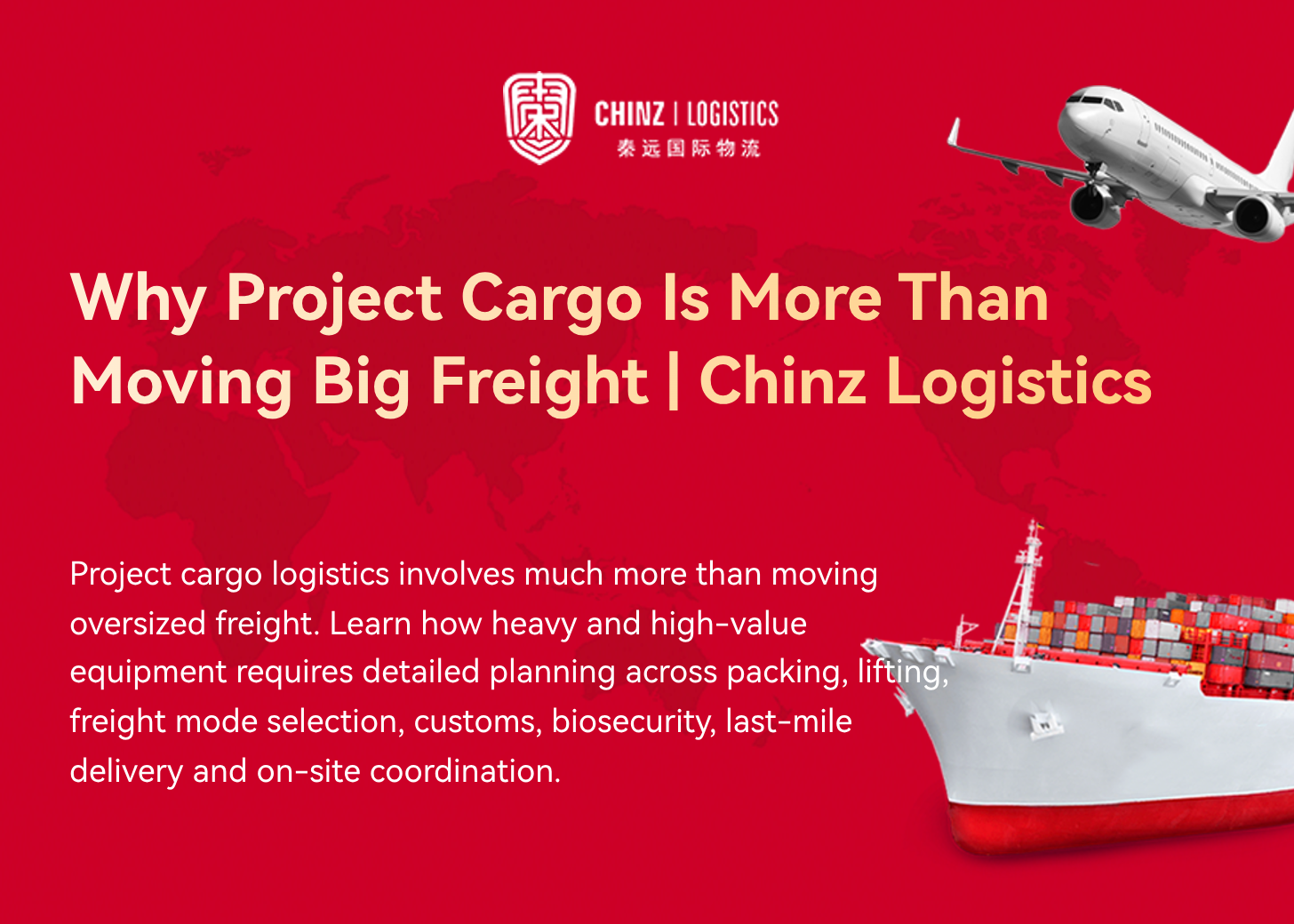
Most international freight moves through standardised systems such as cartons, pallets, 20ft containers and 40ft containers.
Project cargo is different.
Large machinery, heavy industrial components, energy equipment, production lines and oversized structures may require specialised packing, lifting, transport equipment and delivery planning.
This is:
Project Cargo Logistics.
The objective is not simply to move something large from Point A to Point B. The entire movement is treated as a logistics project.
What Is Project Cargo?
Project cargo commonly includes freight that is oversized, overweight, high-value, technically complex or dependent on specialist handling.
Examples include:
• Oversized Cargo
• Heavy Lift Cargo
• Large machinery
• Industrial equipment
• Energy and mining equipment
• Production lines and automation systems
• Time-critical or high-value equipment
Depending on the shipment, transport options may include:
• Flat Rack
• Open Top
• Breakbulk
• RoRo
• Heavy Lift
• Freighter Aircraft
• Heavy Haulage
• Multimodal Transport
The key difference is planning.
The complete transport chain should ideally be designed before the cargo leaves the factory.
The First Step: Understand the Cargo
Project cargo planning normally requires more than basic weight and dimensions.
Important information may include:
• Cargo description and end use
• Exact dimensions and weight
• Centre of gravity
• Lifting points
• Packing method
• Whether the equipment can be dismantled
• Vibration or tilt restrictions
• Cargo-ready date
• Required delivery date
• Final installation location
• Available unloading equipment
For large industrial equipment, these details determine how the cargo can actually move through the entire transport chain.
Why Is Physical Verification Important?
Final packed cargo can differ from preliminary specifications.
Common differences include:
• Increased crate height
• Wider bases
• Higher actual weight
• Covered lifting points
• Packaging unsuitable for the planned handling method
For project cargo, even a small change can affect:
• Aircraft acceptance
• Flat Rack suitability
• Road permits
• Crane capacity
• The overall transport plan
Final packing photos, dimensions, weight and lifting arrangements should therefore be confirmed where possible.
Why Are Overseas Partners Important?
Project cargo can involve many operations at origin and destination.
Origin activities may include:
• Factory coordination
• Packing inspection
• Lifting
• Specialised trucking
• Airport or port handling
• Export customs
• Carrier coordination
Destination activities may include:
• Import clearance
• Biosecurity
• Terminal collection
• Cranes
• Heavy haulage
• Final-site delivery
Reliable local partners provide on-the-ground visibility and help confirm that the real cargo condition matches the planned shipment.
Can Heavy Project Cargo Move by Air?
Yes.
Where delivery time is critical, businesses may consider:
Heavy Lift Air Freight.
Oversized cargo may require Freighter Aircraft and additional assessment of:
• Main deck dimensions
• Cargo door size
• Individual piece weight
• Aircraft floor loading
• Loading configuration
• Airport handling capability
• Lifting equipment
An aircraft operating on a route does not automatically mean it can physically accept every piece of cargo.
Why Is Timing Critical for Heavy-Lift Air Freight?
Heavy-lift air freight is generally selected because speed matters.
Destination arrangements may therefore need to be coordinated before arrival, including:
• Flight arrival
• Cargo terminal handling
• Customs clearance
• Biosecurity
• Crane availability
• Specialised trailers
• Drivers
• Final-site access
Ideally, equipment and transport resources are ready when the cargo is released.
Why Does Project Cargo Need a Plan B?
Even detailed projects can change because of:
• Flight delays
• Vessel schedule changes
• Blank sailings
• Port congestion
• Crane availability
• Road permit delays
• Terminal changes
• Customs or biosecurity delays
Contingency planning may therefore consider:
• Alternative flight dates
• Alternative vessels
• Replacement vehicles
• Revised crane bookings
• Alternative site delivery windows
The goal is not to assume nothing will change, but to be prepared when something does.
Why Is Last-Mile Delivery Important?
For project cargo, arrival at a port or airport is not the end of the shipment.
Final delivery may require:
• Terminal collection
• Crane loading
• Heavy haulage
• Dedicated trailers
• Route planning
• Oversize permits
• Driver or escort arrangements
• Site appointments
• Final unloading
Some high-value equipment may also use dedicated transport to reduce additional handling.
The project is only complete when the equipment reaches the required installation location safely.
What About Equipment Returning to Australia?
Project cargo can also involve:
• Temporary imports
• Repairs
• Equipment returns
• Machinery returning after overseas use
Returned equipment may have been exposed to:
• Soil
• Dust
• Plant material
• Insects
• Outdoor environments
• Timber packaging
Australian biosecurity requirements should therefore be considered before the return shipment begins.
Why Is Cleaning Important?
Used machinery and industrial equipment should be checked for:
• Soil
• Plant material
• Seeds
• Insects
• Organic contamination
Cleaning before shipment can reduce the risk of additional intervention after arrival.
Biosecurity issues at destination may result in:
• Inspection
• Cleaning
• Treatment
• Storage
• Delays
• Potential re-export requirements
How Can BMSB Affect Project Cargo?
Seasonal BMSB measures may be particularly relevant to cargo moving as:
• Breakbulk
• Flat Rack
• Open Top
Where treatment is required, planning may need to consider:
• Treatment method
• Packing
• Treatment timing
• Loading timing
• Supporting documentation
Biosecurity requirements can therefore directly affect the project schedule.
What Are the Main Project Cargo Risks?
Potential risks include:
• Cargo damage
• Schedule delays
• Incorrect transport equipment
• Incorrect dimensions or weight
• Inadequate packing
• Lifting problems
• Customs issues
• Biosecurity issues
• Road transport restrictions
• Site unloading problems
Important project principles include:
• Clear responsibility
• Reliable suppliers
• Early planning
• Regular communication
• Compliance
• Appropriate cargo insurance
Why Is Scope Definition Important?
A project may involve:
• Manufacturer
• Supplier
• Freight forwarder
• Overseas agent
• Shipping line
• Airline
• Port or airport
• Customs broker
• Biosecurity
• Crane operator
• Heavy-haul provider
• Installation site
Responsibilities should be clear from the beginning, including:
• Packing
• Lifting
• Collection
• Export formalities
• International freight
• Import clearance
• Last-mile transport
• Site unloading
This reduces gaps and misunderstandings during execution.
Why Do Project Partners Matter?
Project cargo performance depends on everyone involved.
Problems may arise from:
• Incorrect packing
• Late crane arrival
• Incorrect trucking equipment
• Incorrect cargo measurements
• Terminal handling changes
Reliable projects therefore depend on coordinated:
• Packing companies
• Crane operators
• Heavy-haul providers
• Overseas agents
• Terminal operators
• Shipping lines
• Airlines
Why Consider Cargo Insurance?
Cargo insurance may be particularly relevant for:
• Oversized Cargo
• Heavy Lift Cargo
• High-value Machinery
• Precision Equipment
• Mission-critical Equipment
Insurance planning should consider:
• Cargo value
• Packing
• Lifting
• Transport mode
• Storage
• Final delivery
• Policy exclusions
Insurance cannot remove logistics risk, but it can reduce the financial impact of a major loss.
How Can Digital Load Planning Help?
Load-planning tools may be used to assess:
• Cargo dimensions
• Container capacity
• Positioning
• Weight distribution
• Loading direction
• Remaining space
• Lashing points
This can help identify loading problems before trucks, cranes and cargo arrive at the warehouse.
Digital tools support operational experience rather than replacing it.
Which Transport Modes Can Project Cargo Use?
Depending on cargo size, weight, urgency and destination, options may include:
• FCL
• Flat Rack
• Open Top
• Breakbulk
• RoRo
• Heavy Lift Vessel
• Freighter Aircraft
• Heavy Haulage
• Multimodal Transport
Some projects combine several methods.
For example:
Control systems by air + main machinery by sea + specialised road transport at destination.
Project cargo is therefore about selecting the best overall transport combination, not simply choosing between sea and air freight.
What Types of Cargo Commonly Require Project Logistics?
Examples include:
• Production lines
• Mining equipment
• Energy equipment
• Large machinery
• Transformers
• Power-generation equipment
• Industrial rotors
• Filtration systems
• Robotics and automation systems
• Engineering equipment
• Oversized structures
• Other oversized or overweight cargo
Where cargo cannot move efficiently through a standard freight process, project planning should begin early.
What Information Should Be Prepared?
Useful information includes:
• Cargo description
• End use
• Dimensions of each piece
• Weight of each piece
• Total weight
• Cargo value
• Technical information
• Packing method
• Centre of gravity
• Lifting points
• Whether equipment can be dismantled
• Cargo-ready date
• Required delivery date
• Origin address
• Final destination
• Site photos
• Unloading requirements
Oversized movements may also require information relating to:
• Road access
• Bridges
• Gate width
• Height restrictions
• Turning space
• Crane positioning
Complete information allows a more accurate project plan.
What Does Project Cargo Really Require?
Standard freight often focuses on:
• Rate
• Schedule
• Transit Time
Project cargo also requires:
• Engineering
• Coordination
• Risk Management
• Compliance
• Contingency Planning
Successful delivery depends on every stage of the transport chain being connected.
From the first lift at the factory to final placement at the installation site, it is all part of the same project.
Chinz Logistics Project Cargo Services
Chinz Logistics provides project cargo and oversized freight solutions between China, Australia and other international markets, including:
• International sea freight
• International air freight
• FCL shipping
• Flat Rack transport
• Open Top shipping
• Breakbulk cargo
• Oversized machinery shipping
• Heavy Lift transport
• Robotics and automation equipment
• China collection and warehousing
• Export customs support
• Australian import clearance
• Biosecurity-related logistics coordination
• Heavy transport and final-site delivery
For oversized, overweight, high-value or time-critical cargo, freight planning can be developed around dimensions, weight, packing, lifting requirements, transport schedules, customs, biosecurity and final-site conditions.
If you are preparing a project cargo shipment, provide:
Cargo description + end use + dimensions and weight of each piece + cargo value + packing method + origin address + final destination + cargo-ready date + required delivery date
to help determine a suitable project logistics solution.