
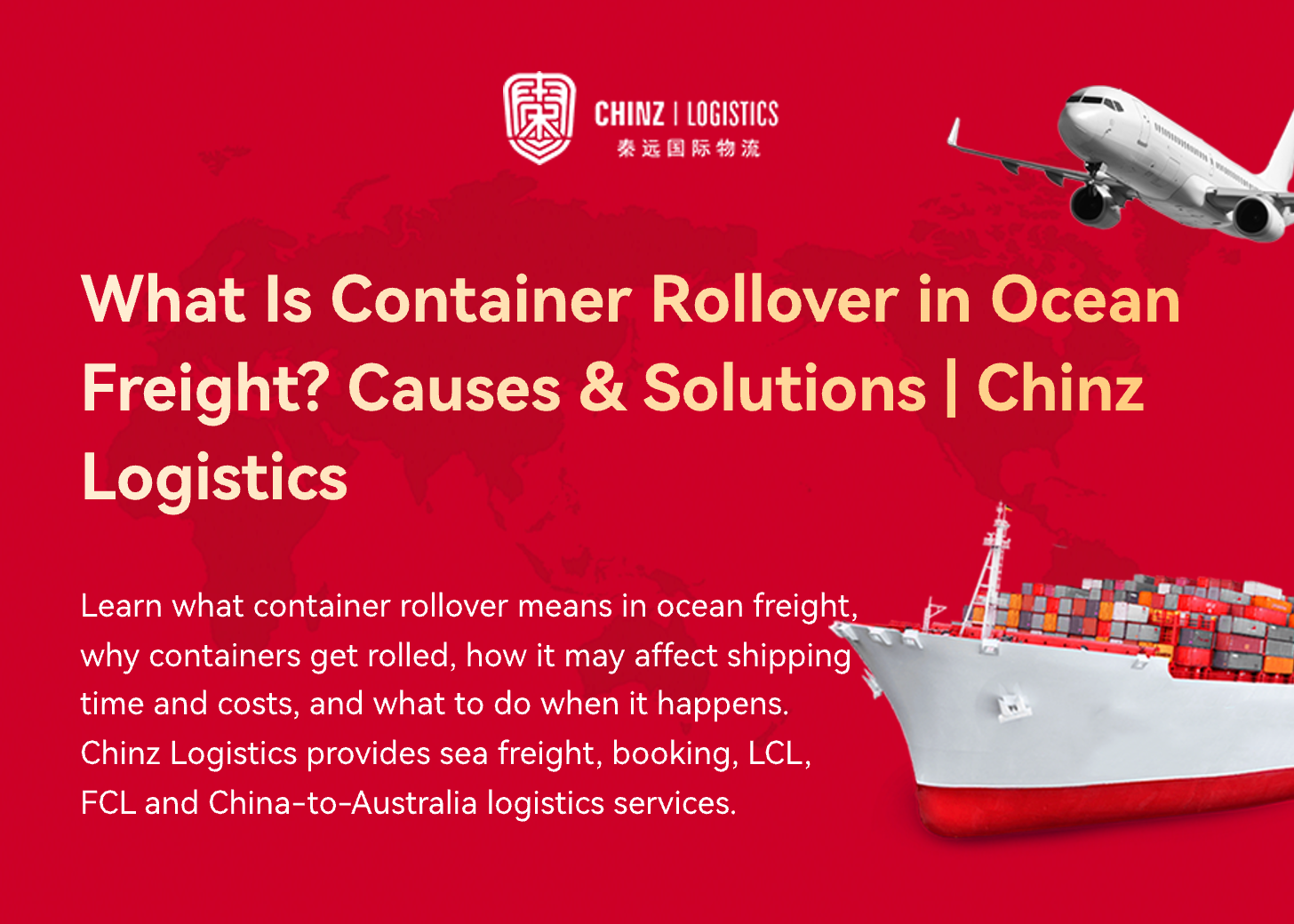
When arranging international sea freight, especially during peak shipping seasons, you may hear freight forwarders or shipping lines use the term “container rollover.”
A shipment may already have a confirmed booking and the container may even have entered the terminal, but the cargo still does not depart on the originally scheduled vessel. This situation is commonly known as a container rollover.
For importers, exporters, e-commerce businesses and commercial shippers with fixed delivery deadlines, a rollover may affect not only transit time but also customs clearance, warehouse appointments and final delivery schedules.
So what exactly is a container rollover, why does it happen, and what should you do if your container is rolled?
What Is a Container Rollover in Ocean Freight?
A container rollover occurs when a container originally scheduled to be loaded onto a particular vessel is not loaded and must be moved to a later sailing.
For example, a container may be booked on a vessel departing on August 10. The cargo has already been packed, cleared for export and delivered to the terminal, but because there is not enough available vessel space, the container is moved to a sailing on August 17 or another later date.
Common industry terms include:
Container Rollover
Rolled Container
Rolled Cargo
A confirmed sea freight booking does not always guarantee final loading. Actual loading may still depend on vessel capacity, weight restrictions, terminal operations, customs clearance and changes to the shipping schedule.
Why Do Containers Get Rolled?
- Shipping Line Overbooking
Overbooking is one of the most common causes of container rollovers.
Shipping lines estimate how much booked cargo will actually arrive for shipment. Some customers may cancel, miss cut-off times or fail to complete export procedures, so carriers may accept slightly more bookings than the expected available capacity.
If more cargo arrives than expected, the number of containers ready for loading may exceed the space available on the vessel. Some containers may then be moved to later sailings.
- Peak Season Space Shortages
Shipping demand often increases before major holidays and retail seasons, including Black Friday and Christmas inventory periods.
When large volumes of cargo are shipped at the same time, vessel space becomes more limited. Ports, terminals, trucking companies and customs operations may also experience increased pressure, which can increase the risk of rollovers.
- Vessel or Route Changes
Ocean freight schedules may be affected by weather, port congestion, late vessel arrivals, route changes, vessel substitutions, port omissions or merged sailings.
If a shipping line reduces available capacity on a particular voyage, some previously confirmed containers may need to be moved to another sailing.
- Late Container Gate-In
International sea freight involves several cut-off times, including customs and terminal deadlines.
If loading, trucking, customs clearance or terminal delivery is completed too late, the container may face a higher rollover risk when vessel space is tight.
Allowing additional time before the final cut-off can reduce unnecessary shipping risks.
- Customs or Cargo Issues
Not every container that misses a vessel has been rolled because of carrier capacity.
Incorrect customs documents, inspections, late customs release, differences between cargo and booking information, or incomplete documents for special cargo may also prevent a container from being loaded on time.
It is therefore important to confirm whether the issue was caused by the shipping line or by the shipment itself.
Why Can a Container Be Rolled After Booking Confirmation?
A sea freight booking is only one stage of the international shipping process.
A typical shipment may include:
- Booking
- Container pickup and loading
- Export customs clearance
- Customs release
- Terminal gate-in
- Vessel planning
- Final loading
Before departure, the carrier still needs to complete final vessel planning based on available capacity, container weight, destination allocation and terminal conditions.
For time-sensitive cargo, it is therefore important to consider not only whether the booking has been confirmed, but also vessel schedule reliability, current space availability and whether the cargo can complete customs clearance and terminal delivery on time.
What Happens When a Container Is Rolled?
The most obvious effect is a longer shipping time.
If the route operates once per week, a rollover may add approximately one week before departure. During peak periods, the following vessel may also have limited space, resulting in a longer delay.
A rollover may also affect customs clearance, warehouse appointments and local delivery arrangements.
Depending on the carrier, terminal and reason for the rollover, additional charges may include:
- Terminal storage
- Detention or demurrage
- Rebooking fees
- Documentation amendment fees
- Customs-related charges
- Other terminal handling costs
Not every rollover results in these charges. Responsibility for the cost depends on the specific reason and shipping arrangement.
How Can You Reduce Container Rollover Risk?
Book Sea Freight Early
If your shipping schedule is already known, confirm vessel space as early as possible, particularly during peak seasons, holiday periods and on busy trade lanes.
Waiting until shortly before cargo cut-off usually means fewer sailing options.
Consider Schedule Reliability, Not Only Price
Freight cost is important, but time-sensitive shipments should also consider schedule reliability, recent vessel delays, port omissions, transshipment arrangements and current space availability.
A cheaper shipping option may not always be the best choice if frequent delays create additional business costs.
Deliver Cargo to the Terminal Early
Factory loading, trucking, export customs clearance and terminal delivery all require time.
If every stage is scheduled close to the final cut-off, delays involving trucking, terminal appointments, documentation or customs inspection can cause the shipment to miss the vessel.
Prepare Accurate Customs Documents
Cargo description, quantity, weight, number of packages, declared value, product material and other export information should be checked before customs clearance.
Accurate documentation can reduce avoidable delays during the export process.
Work with an Experienced Freight Forwarder
An experienced freight forwarder can review current vessel schedules, space availability, port conditions, cargo type and delivery requirements before recommending a shipping option.
If a particular sailing is already heavily booked, alternative schedules may be considered before the container reaches the terminal.
What Should You Do If Your Container Is Rolled?
Once a rollover is confirmed, ask your freight forwarder to confirm the original vessel, voyage, reason for the rollover, current container status and whether a new sailing has already been assigned.
You should then confirm the updated:
- Vessel
- Voyage
- ETD — Estimated Time of Departure
- ETA — Estimated Time of Arrival
- It is also important to check whether the bill of lading or other documents need to be amended and whether any customs procedures need to be repeated.
If the rollover was caused by carrier overbooking or a vessel adjustment, ask whether additional storage, rebooking or documentation charges can be waived or reduced.
For commercial cargo, warehouse deliveries or local Australian transportation, downstream arrangements should also be updated according to the new vessel schedule.
Does a Container Rollover Always Mean a One-Week Delay?
No.
The actual delay depends on how frequently vessels operate on the route and whether space is available on the next sailing.
If several vessels operate each week, the delay may only be a few days. If the service operates once per week, missing one sailing may result in approximately one additional week of waiting.
During peak season, the following sailing may also be fully booked.
For a more accurate estimate, confirm the updated vessel, voyage, ETD and ETA.
Is a Container Rollover the Same as a Vessel Delay?
Not exactly.
A vessel delay means the original vessel itself departs later than planned.
For example, if a vessel was scheduled to depart on August 10 but actually leaves on August 13, while your container remains on the same vessel, this is a vessel delay.
A container rollover means your container is not loaded onto the original sailing and is reassigned to another vessel or voyage.
Both can affect delivery time, but the causes and required actions are different.
How Can You Check Whether Your Container Has Been Loaded?
If your cargo has already entered the terminal, you can ask your freight forwarder to confirm the actual loading status.
Useful information to check includes:
- Vessel and voyage changes
- Updated bill of lading details
- Container tracking status
- Shipping line tracking records
- Actual vessel departure information
Carrier tracking systems may sometimes update with a delay. For time-sensitive cargo, direct confirmation from the freight forwarder handling the shipment may provide a clearer update.
Ship International Sea Freight with Chinz Logistics
Chinz Logistics provides international sea freight and China-to-Australia logistics services, including:
- China to Australia sea freight
- LCL shipping
- FCL shipping
- Sea freight booking
- China warehousing
- Taobao and e-commerce consolidation
- Furniture and oversized cargo shipping
- Cargo consolidation and protective packing
- Local delivery in Australia
Shipping solutions can be selected according to cargo weight, dimensions, packaging, delivery timeframe and Australian destination.
If you are preparing a shipment from China to Australia, provide:
Cargo description + quantity + weight + packed dimensions + Australian suburb + postcode
to help determine a suitable international freight solution.